
Clank!
Dire Wolf DigitalBoard
4.8125.00 Reviews
- Version
- 3.0.3
- Installs
- 10.00K
- Age Rating
- Everyone
Screenshots
Our Review of Clank!
 Analysis by Appyee
I tend to enjoy board games that make every choice feel like it has a consequence, and Clank! gets that tension across quickly. It puts deck-building and a fantasy dungeon caper together: you want to gather valuable loot, but careless movement can draw danger toward you. I find that push and pull more interesting than simply building the strongest deck, because a clever plan still has to account for when to take a risk and when to head back.
A sensible way to approach a run
For a first session, I would focus less on trying to collect everything and more on understanding how the cards, movement, and noise affect one another. Your starting deck is modest, so new cards can make a real difference; at the same time, adding power is not automatically the right move if it distracts you from getting safely through the dungeon. I like to pause before buying or playing a card and ask whether it supports the route I am taking, rather than treating every attractive option as an obvious upgrade.
That habit helps make the game’s central trade-off clearer. A deeper trip can bring better rewards, but it also gives you more chances to make noise and more ground to cover on the way out. If you are learning, aim for a manageable objective and notice which decisions caused trouble. After a couple of runs, you will have a better feel for when your deck is helping you move and when it is tempting you to stay too long.
Settings and learning curve
The app is a digital adaptation by Dire Wolf Digital, and its tutorial is useful if you have not played the tabletop game. I would take time to work through the explanations instead of skipping straight into a competitive session. Learning the turn flow first makes it easier to pay attention to the meaningful decisions later, rather than wondering what a card or action is asking you to do.
Before settling into a regular routine, check the available play options and any settings that affect how a session is presented. I avoid assuming that a digital board game will behave exactly like a physical table: the app handles the rules, but you still need to understand why a move matters. If you are playing on a small phone screen, give yourself a moment to inspect cards and the board before committing to a turn. A larger screen can be more comfortable for reading the layout, while a phone is handy when you only have a short break.
The game is rated Everyone, which makes its fantasy theme broadly approachable, but that does not mean every player will enjoy its strategic pressure. A younger or completely new player may need time with the tutorial and a patient first game. I would introduce it as a game of choices and risk, not as a relaxed treasure-collecting romp.
Patterns that make decisions clearer
Once the rules feel familiar, I find it helpful to keep a simple rhythm: decide what kind of reward you are pursuing, build toward that plan, then reassess whether the return route still looks sensible. That is more reliable than chasing every promising card or treasure as it appears. The game’s tension comes from balancing ambition with escape, so a plan should include an exit rather than only a destination.
Another useful habit is to notice the cost of a detour. A card that looks strong in isolation may be less useful if reaching it means taking a risky route or spending turns that would be better used getting out. Likewise, a cautious run is not automatically a weak one: leaving with a smaller haul can be the better decision if the alternative is pressing your luck without a clear reason. I enjoy that the game makes restraint feel like a strategic choice rather than a failure to explore.
For a quick evening session, I would play solo when I want to concentrate on the route and card choices without coordinating schedules. When friends are available, multiplayer changes the mood: the race for loot adds pressure, and watching other players’ progress can make your own decision to turn back feel urgent. Those are different ways to enjoy the same core problem, not interchangeable versions of it.
The tension of a digital dungeon run
Imagine this: you're a sneaky thief, sneaking around a dragon's lair, trying to steal treasures without making a sound. Sounds epic, right? That's basically the premise of Clank!. It's a game that combines the strategic depth of deck-building with the excitement of dungeon crawling. What really sets it apart is the unique "clank" mechanic, where each risky move can generate noise, potentially alerting the dragon. Talk about living on the edge!
Gameplay mechanics and trade-offs
Diving into the mechanics, players start with a basic deck of cards. As you progress, you collect more powerful cards to enhance your deck and increase your chances of surviving the dragon’s wrath. The balance between building your deck and moving stealthily through the dungeon is crucial. One wrong move, and you'll find yourself scrambling to escape!
The game offers a good mix of strategy and luck. You need to plan your moves meticulously, but sometimes, you have to rely on the luck of the draw. This combination keeps each playthrough fresh and exciting.
Visuals and sound
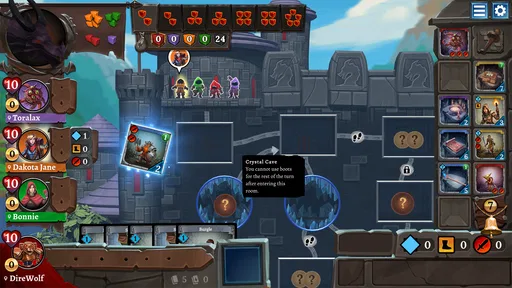
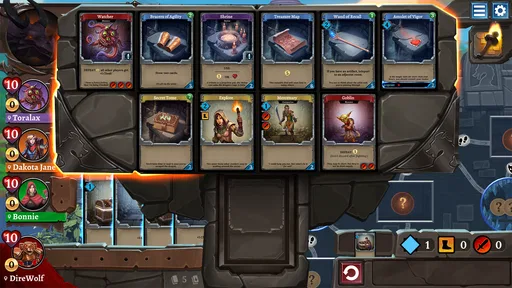
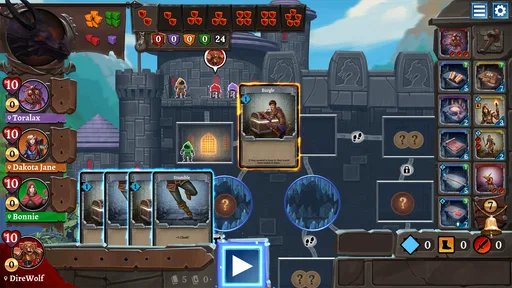
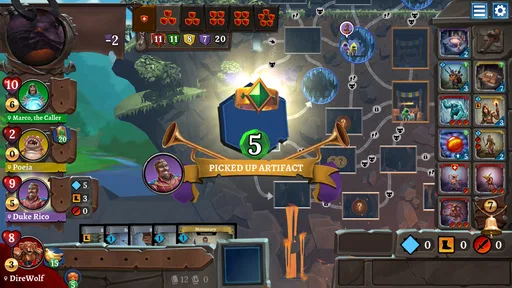
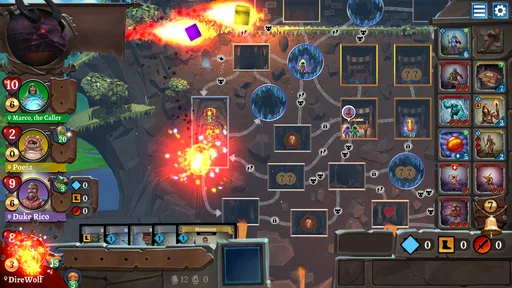
Visually, the game is pretty stunning. The art style is vibrant and detailed, drawing you into its fantasy world. The sound effects are equally impressive, adding to the tension of sneaking around the dungeon. The clinks and clanks as you gather treasures make the experience all the more immersive.
Sound and presentation help the digital version feel lively, but they do not replace the decision-making. I would turn the volume up when I want the full atmosphere and keep it quieter if I am playing somewhere that calls for discretion. Either way, the important thing is to watch the consequences of your choices: the audio gives the fantasy its texture, while the strategic challenge comes from judging how much risk your route is worth.
Replayability and alternatives
One of the standout features of the game is its high replayability. Each game is different due to the random setup of the dungeon and the variety of cards. This ensures that you can enjoy numerous sessions without feeling like you've seen it all. Plus, playing with friends adds a competitive edge, as you all race to grab the best loot while avoiding the dragon.
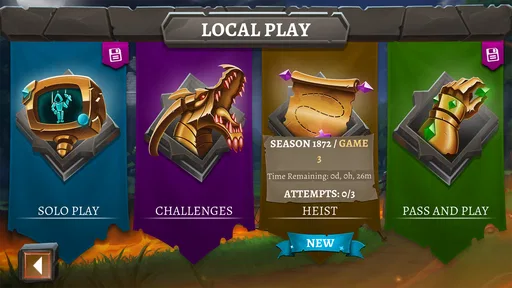
The app version maintains this high replayability, offering solo modes and multiplayer options. Whether you're playing on your own or challenging friends, there's always a new strategy to explore.
Compared with a straightforward card battler, this is a better fit if you want the board position and route through the dungeon to matter alongside deck choices. Compared with a light, quick board game, it asks for more attention: you are weighing your build, your location, and the danger of lingering. If your favorite part of a board game is social conversation with little interruption, a physical game at the table may suit you better. Here, the app is most appealing when you want the rules and play space handled digitally and can give the decisions your focus.
Who will enjoy it, and who may not
I would recommend it to players who like deck-building but want more than card efficiency alone, and to board-game fans who enjoy calculated pushes into danger. It can also work for someone curious about the tabletop style of play who would rather learn through an app tutorial than teach the rules from scratch. The combination of solo play and multiplayer gives you a way to choose between a private planning exercise and a contest with friends.
I would steer away from it if you want a low-pressure game where every turn is obviously safe, or if random draws frustrate you even when you have made a thoughtful plan. It is also not my first choice for a very short, distracted play session: a brief break can be enough to start, but the decisions are more satisfying when you can follow the whole run and think about your route. Players who mainly want an abstract puzzle with no theme or luck may prefer a more deterministic board game.
Getting comfortable with the app
Installing and navigating the app is a breeze. The interface is intuitive, and the tutorials are helpful in getting you up to speed if you're new to the game. The developers have done a great job of capturing the essence of the tabletop game while making it accessible for mobile users.
The app also offers a smooth performance with minimal lag, which is always a plus. Whether you're playing on Android or iOS, the experience is seamless.
On Android, the game is listed for $10.99, with in-app purchases shown at $8.99 per item. I would treat the purchase as a commitment to a full board-game experience rather than something to open for a quick, disposable round. The current version is 3.0.1, and it requires Android 10 or later. It has an average rating of 4.9 from around 1.9K ratings, with over 10K installs. Those figures suggest an established audience, but the right question for me is still whether you enjoy the specific mix of deck construction, route planning, and risk.
Clank! was released on Oct 4, 2024, and the age rating is Everyone. Those details make it easy to judge basic compatibility, but I would still check that your device meets the Android requirement before buying. If you are deciding between the mobile version and a physical board-game night, the app is convenient when you want to play solo or cannot gather a group; a table version is preferable when handling pieces and talking through turns are part of the fun.
Where mastery has limits
Even with a good routine, you cannot plan away every uncertain draw. That is part of the appeal, but it is also the main limit for players who want total control. I try to make decisions that remain sensible if the next card is not ideal, rather than building a strategy that only works under perfect conditions. The game rewards attention and adjustment more than a rigid script.
There is also a learning period before the tension feels fair. At first, it is easy to focus on treasure and miss how the danger of staying longer changes the whole plan. The tutorial can help, but the real lesson comes from seeing the consequences of a run and applying them next time. If that cycle sounds enjoyable, the game has room to reward experience; if repeating a run to learn from it sounds like a chore, its replayability may not be enough to win you over.
A lasting pick for the right kind of player
All in all, this is a strong choice for fans of deck-building and adventure games. Its distinctive risk mechanic, engaging visuals, and sound give each run character, while the mix of strategy and luck keeps outcomes from feeling completely scripted. If you enjoy making a plan and revising it when the dungeon turns against you, I think it is worth considering. Just remember that the best haul is not always the one that asks you to stay the longest.
Verdict
Strengths of Clank!
- Engaging gameplay with strategic depth.
- Expansive content with multiple expansions.
- Easy to learn, hard to master dynamics.
- Attractive graphics and smooth interface.
- Regular updates enhance game experience.
Limitations of Clank!
- Can be time-consuming for casual players.
- In-app purchases can be pricey.
- Requires stable internet connection.
- Occasional bugs in multiplayer mode.
- Limited offline gameplay options.
Other Releases by Dire Wolf Digital
View All


Similar Picks in This Category
View All
Ludo King®
Gametion4.1

Ludo
Yarsa Games4.6

Tile Master® - Matching Game
Higgs Studio3.6

Checkers Online
CC Games4.6

Dominoes
Loop Games4.7

Chess
Chess Prince4.6
Frequently Asked Questions
What is the main objective of Clank! as a game?
Clank! is a strategic deck-building adventure game where players aim to collect as much treasure as possible while navigating through a dungeon. The main objective is to manage your deck effectively, avoid making too much noise (or 'clank'), and escape the dungeon before the dragon awakens and attacks.
How does Clank! differ from other deck-building games?
Clank! stands out with its unique blend of deck-building mechanics and board game elements. Unlike traditional deck-builders, Clank! incorporates a physical board where players move their characters to collect treasures and complete objectives, adding a layer of strategy and spatial awareness to the gameplay.
Is Clank! suitable for solo play?
Yes, Clank! offers a solo play mode where players can challenge themselves against an AI opponent. This mode allows for a unique single-player experience, maintaining the game's excitement while providing a different set of challenges and strategic decisions compared to multiplayer sessions.
What platforms is Clank! available on, and are there any differences between them?
Clank! is available on both Android and iOS platforms. The gameplay experience remains consistent across devices, offering intuitive controls and the same immersive graphics. However, performance may vary slightly depending on the device's specifications and operating system version.
Are there in-app purchases or expansions available for Clank!?
Yes, Clank! offers in-app purchases that include additional expansions and content packs, enhancing the base game with new challenges, maps, and characters. These expansions provide extended gameplay and allow players to explore new strategies and adventures, keeping the game fresh and engaging.
Play our best games!


